
November 15, 2026
Music
Music
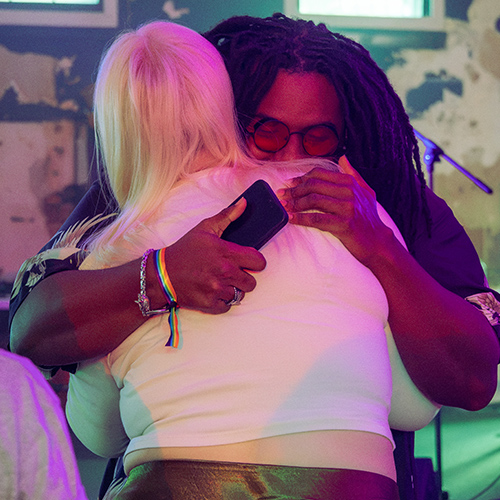
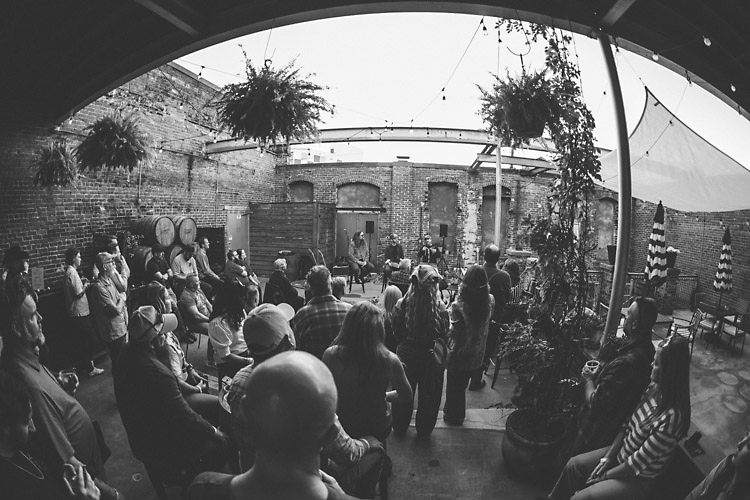
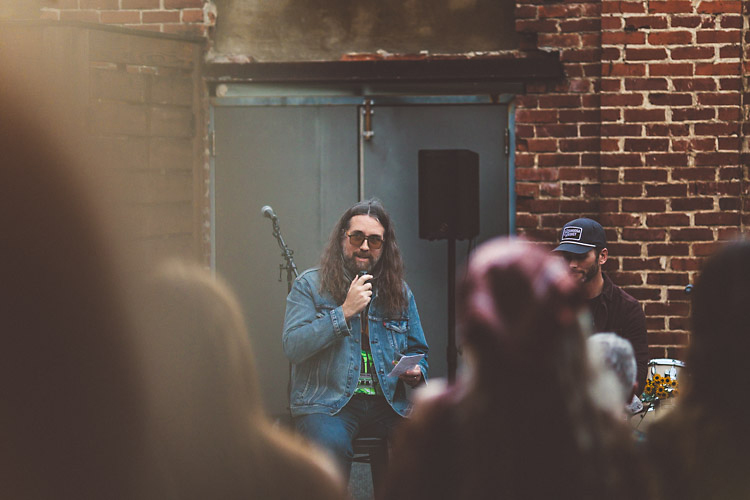
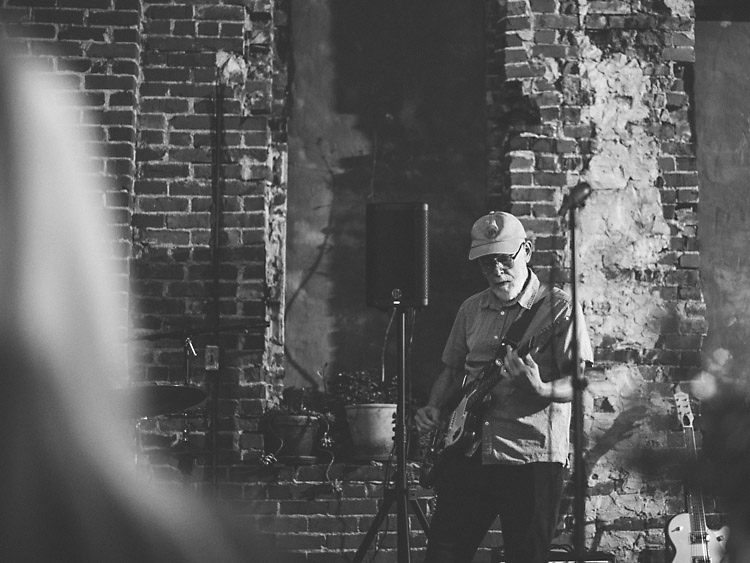
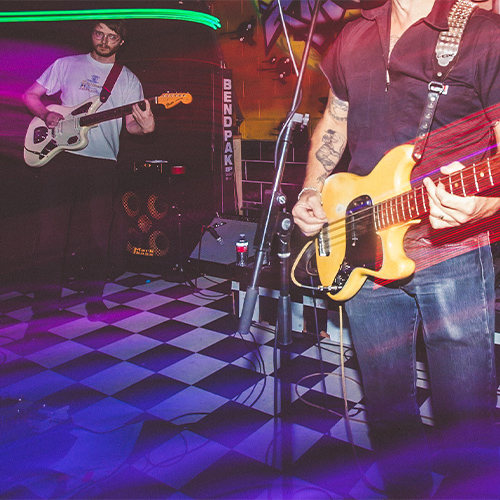
On November 7th, Soft Animal hosted their first Queer music festival for MAXIMUM QUEER JOY and Hearsay was there to document.

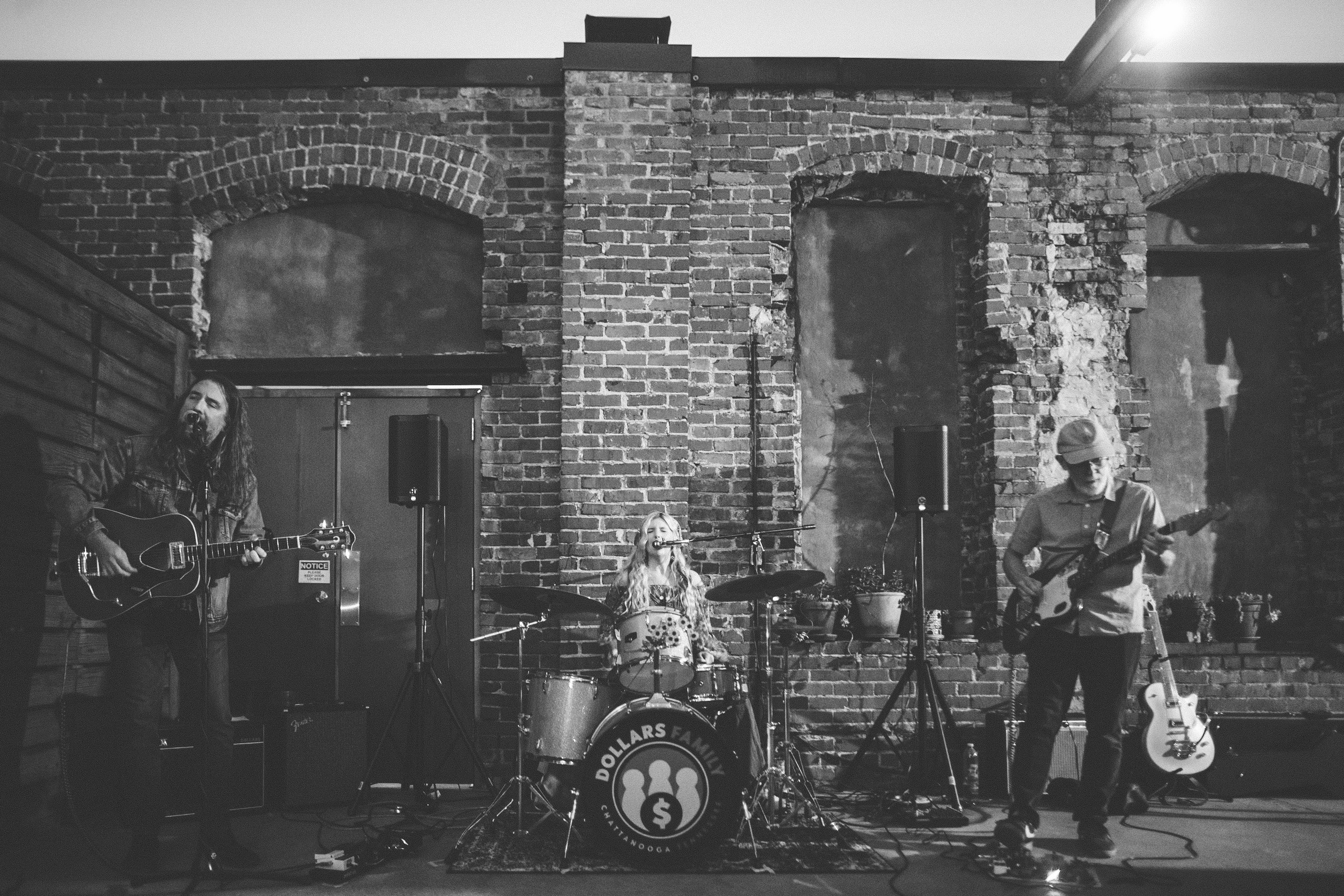
When I heard about Chatt Whiskey's latest project, something intersecting the Chattanooga music scene, Tennessee Sugar Maple trees, and subversive Soviet Union bone records, I needed the whole story. The creative director, Rich Abercrombie (aka RJ Dollars of Dollars Family band) welcomed me to the distillery a couple of weeks ago and shared the tale behind Bad Chattanoogan — its whiskey and its music.
We sat at the bar of their on-site event space, next to a matte black bottle and a wooden disc that smelled strongly of a high proof liquid. From just a few minutes of conversation, anyone can tell Rich takes real joy out of his creative endeavors, from whiskey marketing to music making.
"If you can believe it," Rich said excitedly from under his Neil Diamond hat, "that's been drying for almost a week."
He encouraged me to pick up the circle of wood. It still felt damp, almost pliable. Looking closer, I could see tightly-packed, groove lines you might mistake for tree rings.
"Is this the record?"
"That's it."
Etched like any vinyl on Yellow Racket's shelves, you could put that wood on a turntable and hear music. Each record had played exactly once, before submerging into Chattanooga Whiskey’s latest unique batch.
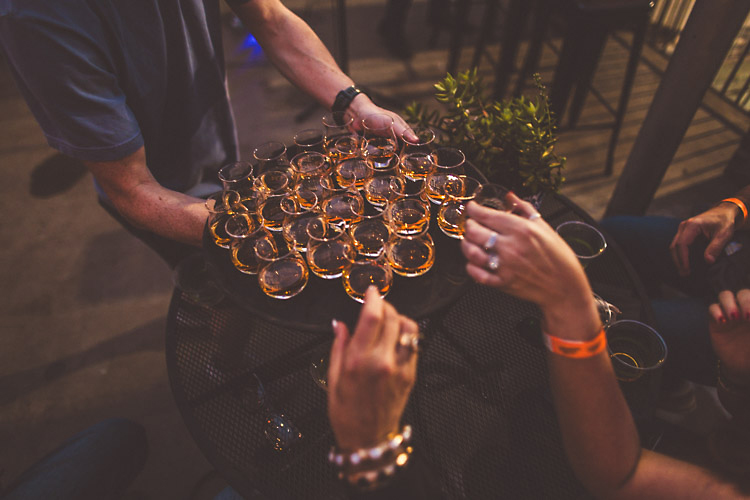
For connoisseurs: in the bottle is a straight Tennessee whiskey drawn from three high malt mash bills of primarily Tennessee-grown grain, mellowed through sugar maple charcoal, aged more than four years in oak, and bottled at 100 proof.
It's been released as two vinyl-inspired blends. Side A and Side B.
Side A: The Dollars Family latest single “Bad Chattanoogan” written, produced, and pressed in mere months for the specialty release this October.
Side B: “City I Love,” a boot-stomper from the Dollars Family’s first album, Bottom Feeders.
“These two songs are love letters to Chattanooga, and are all about what makes a city, the people," Rich said. “Inspired by celebrities who were raised here, like artist Wayne White, actor Samuel L. Jackson, and blues legend Bessie Smith, to all the amazing makers, shakers, and go-getters that make this city tick today.”
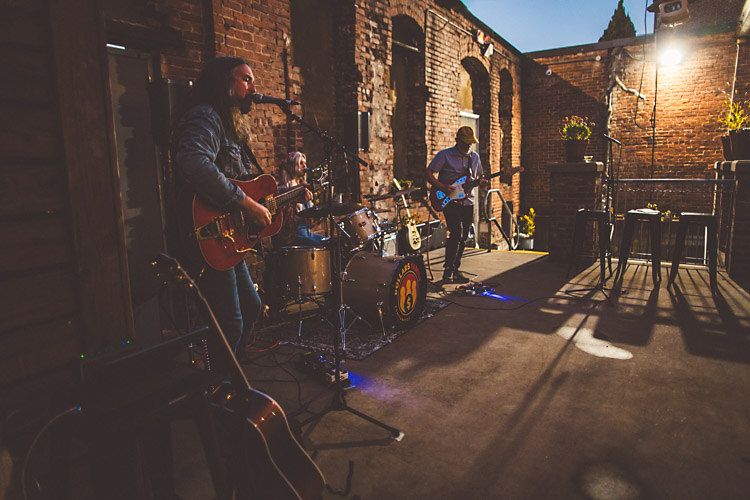
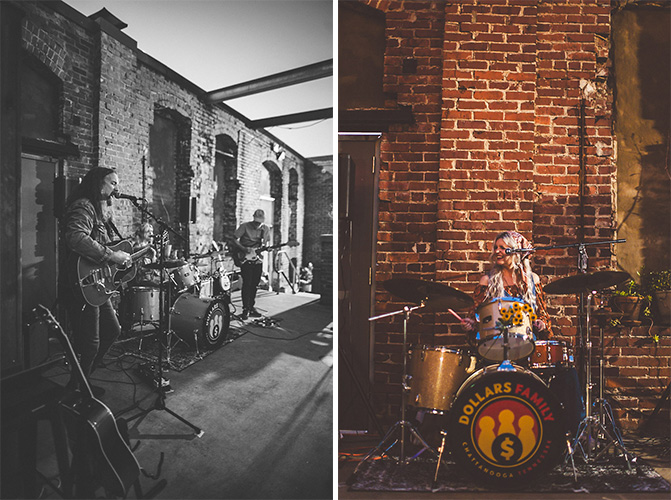
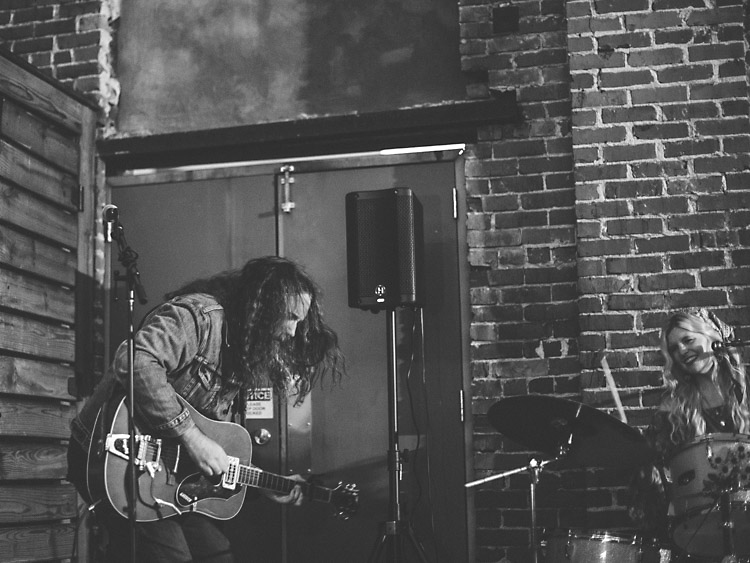
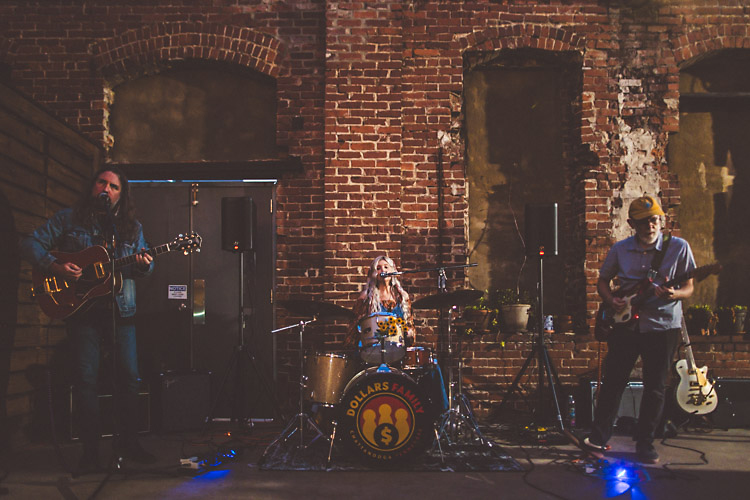
The three-piece band, made up of RJ Dollars, Jennie Dollars, and Callie Dollars, deliver these love letters with genuine personality and contagiously down-to-earth rhythm.
And if you love Easter eggs, hidden in the packaging are various nods to Chattanooga including: a notorious wallet carried by Chattanooga native Samuel L. Jackson, an inaugural ticket to the old Chattanooga Lookouts baseball stadium, a $3 note from the Bank of Chattanooga, and the first lottery ticket ever sold in Tennessee, bought at Steve Ray's Midnite Oil in Ooltewah, TN.
Aside from Chattanooga Whiskey's distilling expertise and the Dollars Family’s musical talent, what makes the project unique comes down to the wooden records on the bar before us.
During traditional barrel aging, the physical interactions of liquid and wood are what turn the naturally clear spirit brown. The changing temperatures outside causes the wood to stretch and contract like a breath, so anything inside of the barrel “breathes” along with the whiskey.
Some brands have started dabbling with something called Sonic Aging. “Sending vibrations into the wood of a whiskey barrel helps speed up the process of whiskey circulating through the wood,” he explained. Several other brands were experimenting with playing music near/at their whiskey barrels.
Folks could enjoy a drink that had been serenaded by their favorite song or album. But Rich wanted to go a step further. “What if you could age a whiskey with your favorite album?” Could they put a physical piece of music inside the barrel?
“For four years, that song is moving over and over again through the vibrations of the barrel. Then four years later,” he mimics the smooth tipping of a bottle, “you can pour that whiskey. You can drink that song.”
But before the team could put a song into the whiskey, they had to get a song into a piece of finishing wood.
Their inspiration came from California, a technique developed by engineer Amanda Ghassaei. She pushed the envelope when it came to record-making — putting songs into plywood, acrylic, and even paper — in a nod to the bone records of the U.S.S.R.
After WWI, vinyls of western or American music were heavily censored in the Soviet Union. To create art around the censorship, roentgenizdat or “music on ribs” record-makers scavenged discarded x-ray film, a material just soft enough and just sturdy enough to hold grooves full of music. They cut out circles with scissors and burned the center hold with a cigarette.
The records degraded quickly with use, but to this day, you can find some in private collections and music museums.
Amanda’s method pays homage to creative renegades of the past, with modern tools and processes. She converts a song's digital file into a wave, simplifies it into a single continuous line, wraps that line into a spiral at 45 rpm, and sends it to a laser engraver that burns the groove into the surface.
Because a laser can only carve one line, each song was mixed down to mono, exactly how the earliest records worked. As the team likes to say, "It's more Thomas Edison than Dolby Atmos."
Rich laughed, “It's hard! It takes months. It's trial and error. But, she told us the wood that works really well was sugar maple. That was our aha moment!”
Sugar Maple just so happens to be a crucial element of distilling official Tennessee Whiskey. The stars were starting to align for Rich’s creative team.
Before any engraving could happen though, the discs – cut from solid maple – went to Independent Stave Company, Chattanooga Whiskey’s cooperage, which toasted them on low heat over a 24-hour profile. This transformed the sugars deep within the wood into a range of flavor compounds, and also prepared their surface for laser engraving.
Then, the actual laser engraving fell to 81-year-old Ben Rosenstein of nearby Mountain View Engraving, the one Chattanoogan willing and persistent enough to experiment alongside the team until it finally worked. Ben took the team's files and engraved each song onto 15 discs — roughly two hours of cutting apiece — 30 records in all.
Founding Distiller, Grant McCracken shared, “For more than 25 years, Ben has been the expert other laser engravers call when their machines break or they can’t figure something out. If anyone could turn a disc of toasted maple into a working record, it was him. When I think of what Bad Chattanoogan means, I think of a person like Ben.”
If Rich and the Chattanooga Whiskey team want to tell a story, they’re going to tell it all the way. They don’t believe in gimmicks; but in hardworking creativity that surprises and delights people. And in that way, from start to finish, the Bad Chattanoogan project embodies the spirit of our city’s creative community.
Check it out, y’all.
On November 7th, Soft Animal hosted their first Queer music festival for MAXIMUM QUEER JOY and Hearsay was there to document.
Omni Reflects on Ten Years of Deluxe, Creative Freedom, and What Comes Next.